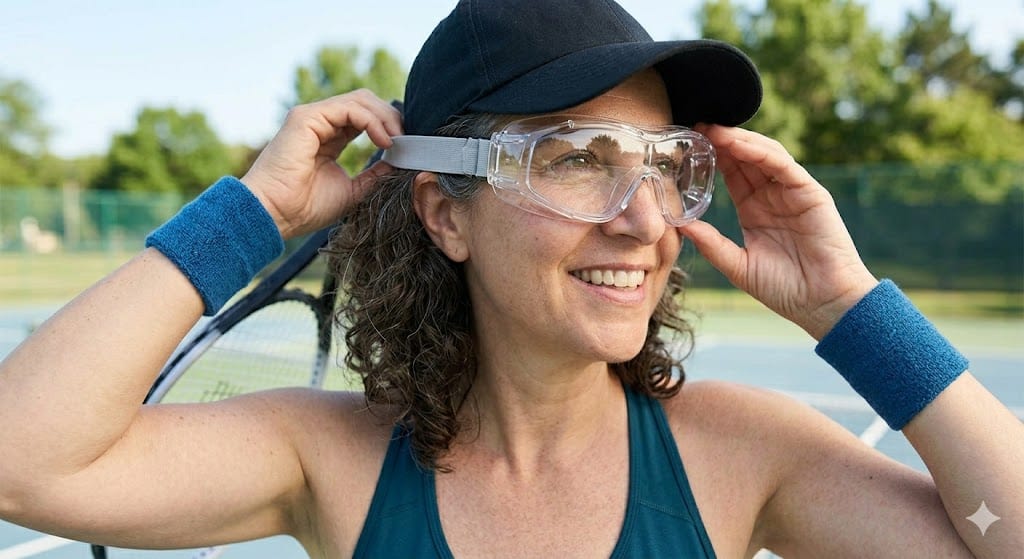
Each year, an estimated 100,000 people are hurt by sports-related eye injuries. About 13,500 of these injuries result in permanent vision loss. In support of Sports Eye Safety Month this April, the American Academy of Ophthalmology reminds athletes everywhere that the great majority of sports-related eye injuries can be avoided by simply wearing the proper protection.
April marks Sports Eye Safety Month, an initiative led by the American Academy of Ophthalmology (AAO) to highlight a startling statistic: nearly 30,000 sports-related eye injuries are treated in U.S. emergency rooms each year. The silver lining? Experts agree that 90% of these injuries are preventable with the right protective gear.
The Risk Factors: Which Sports are Most Dangerous?
While no sport is entirely risk-free, some carry a significantly higher chance of ocular trauma. Basketball is actually the leading cause of sports-related eye injuries in the U.S., followed by baseball and racquet sports.
-
High Risk: Basketball, baseball, hockey, lacrosse, and paintball.
-
Moderate Risk: Soccer, tennis, and golf.
-
Low Risk: Swimming, gymnastics, and track and field.
Common Sports-Related Eye Injuries
Injuries can range from temporary discomfort to permanent vision loss. Common conditions include:
-
Corneal Abrasion: A painful scratch on the surface of the eye, often from a finger or equipment.
-
Hyphema: Bleeding in the front chamber of the eye (between the cornea and iris), often caused by blunt force trauma.
-
Traumatic Cataract: Clouding of the lens following a hard hit.
-
Retinal Detachment: A serious condition where the light-sensitive layer at the back of the eye is pulled away from its supporting tissue.
Essential Safety Tips for Athletes
-
Skip Regular Glasses: Standard eyeglasses or sunglasses are not a substitute for safety gear. In fact, they can shatter upon impact, causing even more severe damage to the eye.
-
Look for the ASTM F803 Label: When buying sports goggles or face shields, ensure they are labeled ASTM F803 approved. This means they have been performance-tested to withstand high-impact hits.
-
Choose Polycarbonate Lenses: This material is virtually shatterproof and impact-resistant, making it the gold standard for sports eyewear.
-
Replace Old Gear: Polycarbonate can weaken and yellow over time. If your goggles are scratched or damaged, replace them immediately to ensure they still offer maximum protection.
-
Don’t Forget the UV Protection: For outdoor athletes (like golfers or skiers), 100% UV protection is critical to prevent long-term damage like cataracts and macular degeneration.
What to Do if an Injury Occurs
If you or a teammate suffers an eye injury, seek medical attention immediately, even if it seems minor. Symptoms like blurred vision, sudden “floaters” or flashes of light, and persistent pain require an urgent exam by an ophthalmologist to rule out internal damage.
Reference: https://www.aao.org/newsroom/observances